15 Jul 2026
Cluster Pays Revolution: How Grouped Icons Transform Reward Dynamics in Digital Mobile Platforms
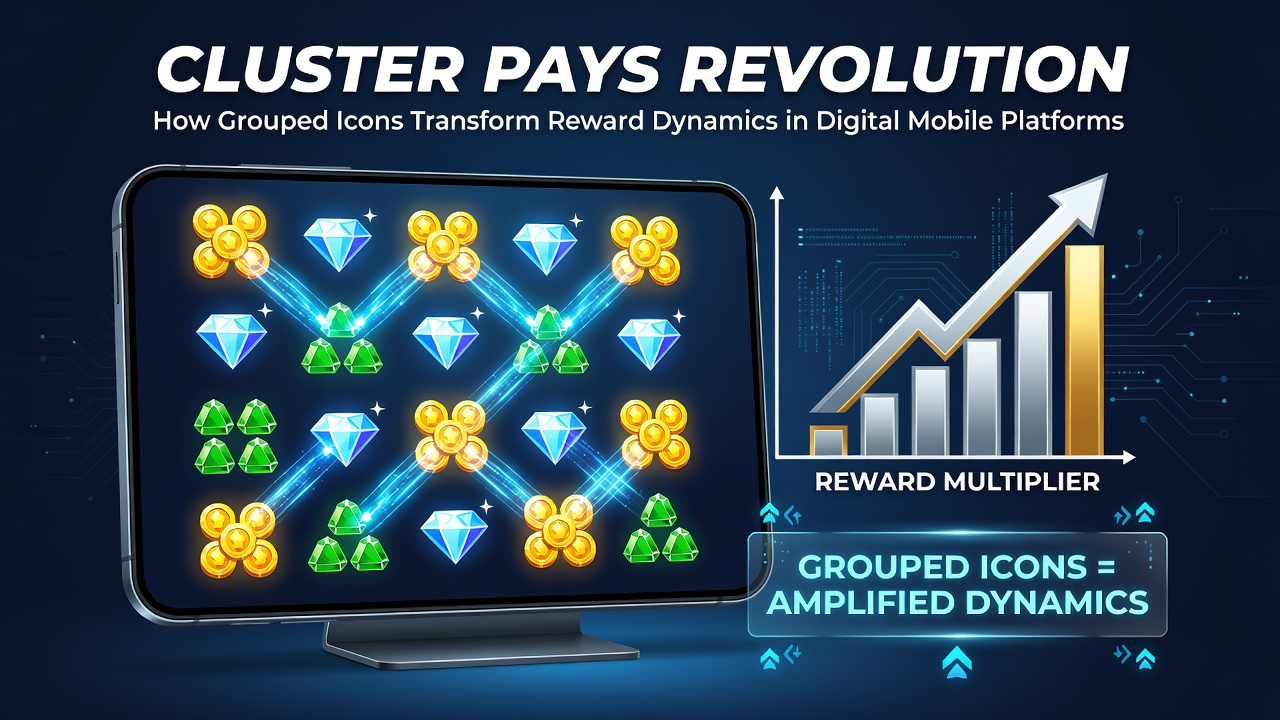
Cluster pays mechanics replace traditional paylines with systems where matching symbols form adjacent groups across reels, and these groups activate wins when they reach minimum sizes. Data from industry reports shows this approach has expanded in mobile slot development since the mid-2010s, with adoption rates rising as platforms optimized for touch interfaces and variable screen sizes.
Mechanics of Cluster Formation
Symbols connect horizontally or vertically in clusters, and the game removes those icons before new ones cascade into place to potentially create additional groups. Observers note that minimum cluster sizes typically start at eight symbols, though some titles adjust thresholds based on volatility settings. Research from the Nevada Gaming Control Board indicates that these cascading sequences extend average session durations on mobile devices by allowing consecutive evaluations without manual spins.
Engineers program adjacency rules into random number generators so clusters form according to predefined probabilities. Those who've analyzed code patterns report that diagonal connections appear in select games while others restrict formations to straight lines. Mobile optimization involves adjusting cluster detection algorithms to process inputs faster on lower-powered processors, and figures from 2025 platform audits reveal reduced latency in group identification compared to earlier desktop versions.
Shift from Paylines to Groups
Traditional paylines require symbols to align on fixed patterns, whereas cluster systems evaluate entire grids for connected groups. Studies from the University of Nevada, Reno gaming technology program demonstrate that cluster evaluation increases the number of potential winning combinations per spin by factors of three to five in comparable reel setups. Developers implemented this change to accommodate smaller mobile screens where fixed lines often felt restrictive during portrait orientation play.
Platform analytics collected through July 2026 show cluster-based titles maintaining higher engagement metrics across both iOS and Android ecosystems. The transition also supports variable reel heights, which expand or contract during play to alter grid dimensions and cluster opportunities. Data indicates these dynamic grids appear more frequently in games released after 2023 as mobile hardware capabilities improved rendering speeds.
Effects on Reward Calculation
Reward multipliers scale with cluster size beyond minimum thresholds, and multipliers compound during cascades when new groups form from replacement symbols. Industry analyses from the European Gaming and Betting Association document average payout frequency increases of 15 to 20 percent in cluster formats versus equivalent payline titles under controlled testing conditions. Mobile platforms integrate these calculations into client-side processing to deliver immediate feedback after each group removal sequence.
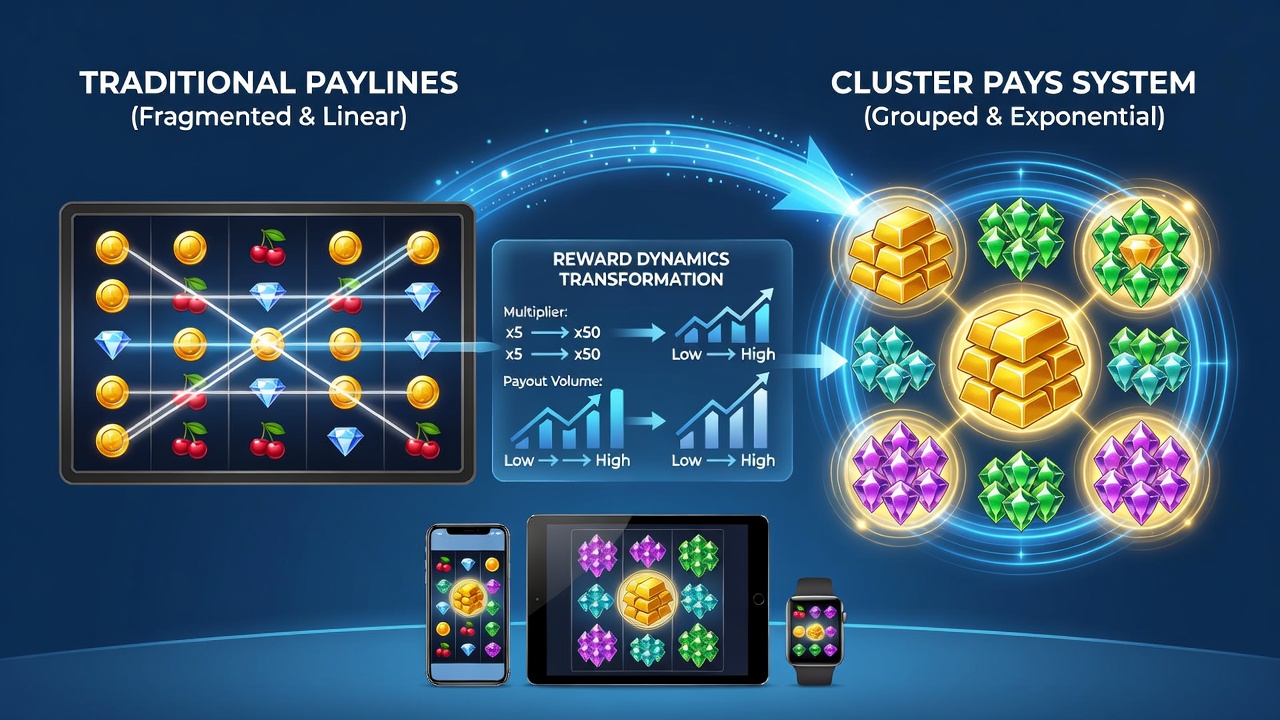
Special symbols such as wilds expand cluster potential by substituting for multiple icon types, and bonus icons trigger separate features when they appear in sufficient numbers. Observers tracking mobile usage patterns note that these combined mechanics encourage prolonged interaction because each spin carries extended resolution phases. Technical documentation reveals that memory allocation for tracking multiple simultaneous clusters requires optimized data structures to maintain performance on devices with limited RAM.
Platform Adaptations and User Interaction
Mobile developers redesigned touch controls to highlight forming clusters through animations that respond to finger taps for manual stopping in some titles. Reports from the New Jersey Division of Gaming Enforcement detail how these visual cues help players track outcomes on smaller displays without requiring additional screen space for payline indicators. Integration with device accelerometers allows tilt-based interactions that influence symbol movement in select cluster implementations, though regulatory approvals vary by jurisdiction.
Backend systems log cluster formation data to refine probability models, and updates released through July 2026 incorporated machine learning adjustments based on aggregated mobile session statistics. Those monitoring platform performance report that cluster detection accuracy improved notably after these refinements, reducing instances of disputed outcomes. Cross-platform synchronization ensures consistent cluster rules whether users access games through native apps or browser-based mobile interfaces.
Market Data and Adoption Trends
Market research compiled through mid-2026 shows cluster pays titles comprising over 35 percent of new mobile slot releases in major regulated markets. Figures from Australian gambling technology reviews highlight faster certification timelines for cluster systems because their evaluation logic aligns with existing random number generator testing protocols. Developers continue to experiment with hybrid models that blend clusters and paylines within single games to offer varied reward pathways.
Conclusion
Cluster pays mechanics continue to reshape reward structures in mobile platforms through adjacency-based evaluations and cascading sequences. Platform data collected as of July 2026 confirms sustained integration across devices, supported by technical adaptations that maintain performance and regulatory compliance in diverse regions. Ongoing refinements in detection algorithms and interaction design sustain the format's presence in digital gaming environments.